
/ News, Research, Studies, Doctorate/PhD, Organizational Unit, People / Nicola Steiner, Student Geowissenschaften MSc, Vorstandsmitglied GEG
10 Days in Scotland, a Geography Field Trip!
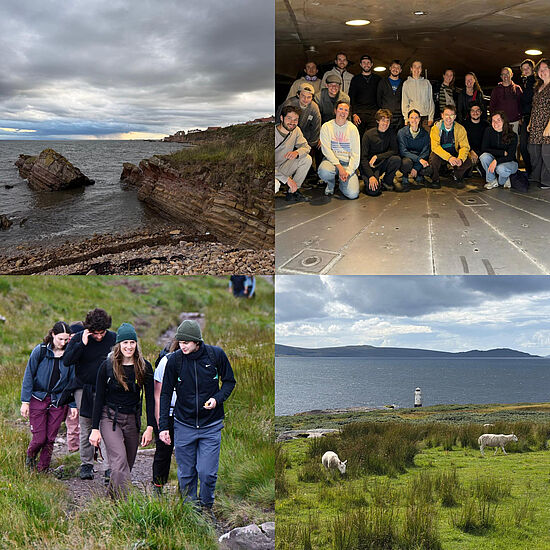
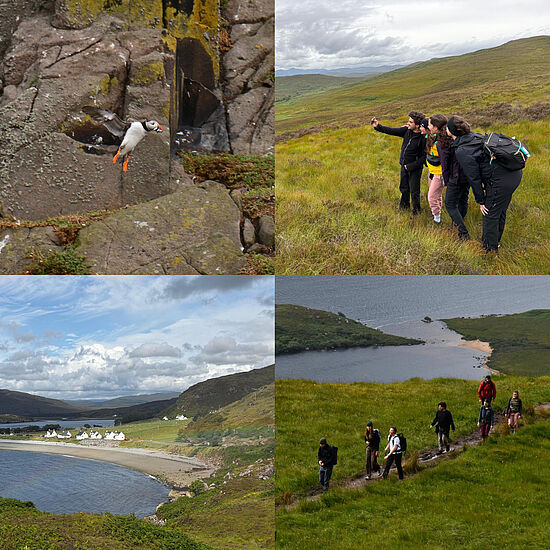
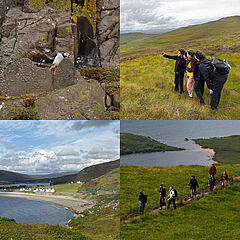
The geography field trip to Scotland took place from July 27 to August 6 under the guidance of PD Dr. Stefanie von Fumetti and Wolfgang Fister. A total of 17 geography students from the University of Basel embarked on the adventure, which began in Stirling. Each of us focused on a specific geographical topic, which we explored in depth and explained to the other participants through short presentations during the field trip. We traveled in a small bus through the dull-green, mostly treeless hilly landscape. To start, we explored moors glowing in shades of yellow, green, and red and studied their ecology; we visited a restoration center in Dundreggan; and we searched for the Loch Ness Monster. The excursion program also included museums, a botanical garden, and the history of Scotland. Scotland is known, among other things, for the founders of modern geology, such as James Hutton, Ben Peach, and John Horne. Accordingly, geological, geomorphological, and soil geography topics were also important, such as the Great Glen Fault or the Moine Thrust, which we were able to examine in the field near Ullapool. We were also able to admire and study the fauna at beautiful springs in the Bone Caves valley. In the heart of the Grampian Highlands, past countless sheep and farmland, lies Aviemore on the edge of Cairngorms National Park. Aside from the osprey, the terrestrial flora and fauna were somewhat comparable to those in Switzerland. Overall, we spent a lot of time exploring nature on foot, climbing hills and mountains, or marveling at gray seals and the coastal landscape in the mudflats. One of my personal highlights was our last stop in Anstruther on the east coast. We took a boat across to the Isle of May, where over 50,000 puffins had made their nesting grounds. Sated by the sights and some fish and chips, we left the island.