
The wind and rain laboratory deals with the recording, analysis and quantification of surface processes and their influence on the detachment and transport of soil particles and aggregates. Accompanying substances such as organic carbon, pollutants, microorganisms and pathogens are also investigated.
Main areas of research:
German:
- Erosion and transport in thin surface streams influenced by raindrops
- Use of fluorescent tracers for particle image velocimetry (PIV)
- Effectiveness of Biochar on wind and water erosion
- Relative importance and interaction of wind and water erosion
- Processes of wind-driven rain
- Dust emission and analysis of physical and chemical composition
- Influence of saltating sand particles on succulent vegetation
English:
- Erosion and transport in raindrop-impacted thin surface flows.
- Use of fluorescent tracers for particle image velocimetry.
- Efficacy of biochar erosion by wind and water.
- Relative importance and interaction of wind and water erosion.
- Process understanding of wind-driven rainfall.
- Dust emission and analysis of physical and chemical composition.
- Influence of saltating sand particle on succulent vegetation.
Another core aspect of the research is the development and improvement of experimental research approaches and equipment to solve these questions.
Our equipment & innovations:
We develop and utilize high-tech experiments and measurement systems, including:
- Field sprinklers and a high-precision laboratory sprinkler with soil flume and controllable water depth and volume- Mobile wind tunnel with sprinkler function
- Portable In-Situ Wind Erosion Laboratory (PISWERL)
- Complex control system for water supply (rainwater, tap water, decalcified water)
- Climatic cabinet with light, temperature and humidity control - Laboratory freezer, drying cabinet and several laboratory balances
Contact us
For further questions about the research topics and equipment, please contact the laboratory manager:
Dr. Wolfgang Fister
Research associate
Research associate
Klingelbergstrasse 27
4056 Basel
Schweiz
Location
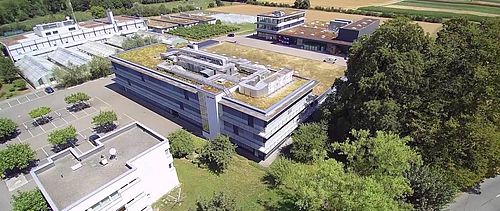
Wind and rain laboratory
Technology Center Witterswil AG
Benkenstrasse 254
CH-4108 Witterswil