
Prof. Dr. Nikolaus J. Kuhn
Professor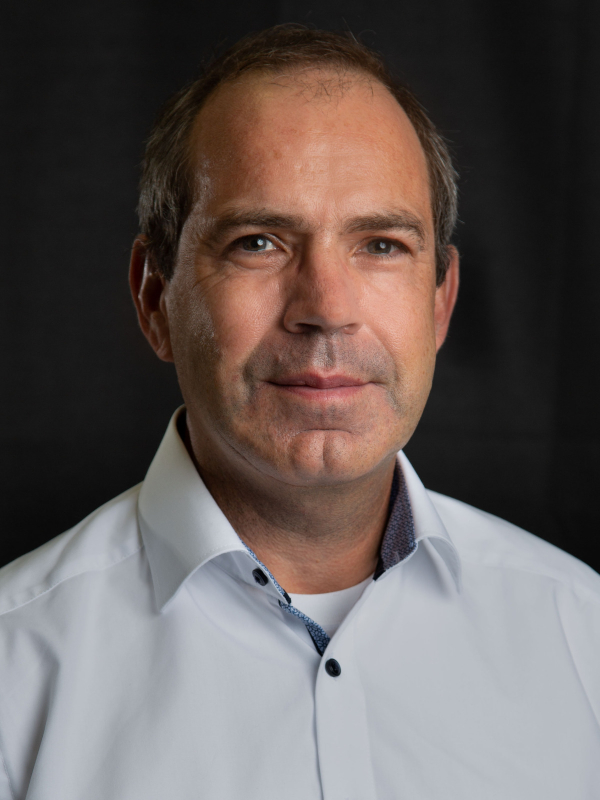
Professor
Klingelbergstrasse 27
4056 Basel
Schweiz
Nikolaus Kuhn is a Professor at the University of Basel, Switzerland. His research investigates how surface processes shape landscapes and influence environmental and climatic change. He focuses on the interactions between soil, vegetation, water and atmosphere to understand how local-scale processes drive landscape evolution and contribute to global Earth system change.
Current research in his group examines how erosion, sediment transport, and soil formation respond to changing climate and land use, and how these processes affect carbon dynamics and biogeochemical cycles. Fieldwork in South Africa explores how land degradation and vegetation change alter sediment and nutrient and carbon fluxes, providing insights into the resilience of dryland landscapes under climatic and land use stress. In parallel, experimental and remote-sensing studies extend these investigations to planetary surfaces such as Mars, using terrestrial analogues to understand how sedimentary and geomorphic features record environmental change beyond Earth.
By combining laboratory and field experiments with drone surveys and satellite observations, his work connects detailed process understanding to large-scale patterns of landscape development and planetary change — linking process to planet. This integrated approach advances insights into how surface processes control the functioning and resilience of landscapes on Earth and across our solar system.
Research: Connecting processes and planet(s)
The Physical Geography and Environmental Change research group investigates how surface processes shape landscapes and influence the Earth system. Our central goal is to determine which local environmental changes are relevant at the global scale — identifying how small-scale processes, such as soil erosion, sediment transport, and land degradation, contribute to broader patterns of landscape evolution, biogeochemical cycling, and climate regulation.
We combine laboratory and field experiments with drone and satellite observations and numerical modeling to bridge the gap between process and planet. Current projects explore the impacts of erosion and vegetation change in dryland environments such as South Africa, the role of soils and sediments in the global carbon cycle, and the use of terrestrial analogues to interpret surface processes on Mars and other planetary bodies.
As part of our contribution to the European Space Agency’s ExoMars mission, we apply our expertise in sediment and soil processes to interpret Martian surface features and reconstruct past environmental conditions on the planet.
By linking detailed process understanding with large-scale environmental patterns, the group seeks to identify the thresholds and feedbacks through which local surface dynamics shape the resilience and functioning of the global Earth system.